Program Overview

Coalition to Leverage and Optimize Sales Effectiveness (CLOSE)

Bring Precision to Customer Acquisition.

The Coalition to Leverage and Optimize Sales Effectiveness (CLOSE) is a CMO Council strategic interest group that curates practitioner-based knowledge to empower, enlighten and enjoin functional marketing leaders in tandem with their counterparts in direct sales, field, branch office, and indirect channel organizations.

CLOSE was developed out of a need to assist, activate and engage the front line and demand chain on both a centralized and distributed intermediary level, in order to leverage resources, truly optimize performance, improve effectiveness and maximize business growth and pipeline potential.

The CMO Council is dedicated to providing information that empowers sales, aligns process and function with marketing, and amplifies the voice and influence of trusted sales agents with their customers. It believes marketing must actively assume the role of predisposed prospect identifier, sales cycle facilitor, conversion enabler, after-market value builder, revenue optimizer, as well as relationship, experience and retention architect.

Strategic Imperative

Sales and marketing are under pressure to redefine their relationship to enable new customer-centric purchasing paths. This requires an entirely new way to collaborate across customer strategy and data, initiatives, technology, activities and metrics.

It is now critical for marketing and sales teams to integrate data and optimize touchpoints across the entire customer journey. They need to focus on finding the shortest, most efficient, profitable and satisfying path to transaction, repeat purchase and after-market experience.

Most sales and marketing organizations haven’t been able to pivot fast enough to the new digital buyer. This means they risk falling short of their revenue mandate. More than 70% of marketers don’t feel very confident in their current sales and marketing model to sell effectively in the digitalized customer journey, according to a new CMO Council report, produced in partnership with KPMG LLP.
background

Key findings from recent CMO Council studies and reports show:

  • Underperforming advertisers waste more than 75% of their marketing on impressions that fail to generate incremental outcomes. (Source: Getting Smart About Ad Waste)

  • 70% of marketers aren’t very confident in their current sales and marketing model to sell effectively in the digitalized customer journey (Source: Sales & Marketing: Driving Revenue Through Collaboration)
  • 68% are only moderately confident or worse in their media marketing and advertising strategy to produce desired business outcomes (Source: Optimizing Outcomes in Media Marketing)
  • Only 24% of top data marketing performers and 2% of bottom performers say they have real-time access to customer insights (Source: The High-Velocity Data Marketer)

The CMO Council’s recent report -- “Sales & Marketing: Driving Revenue Through Collaboration” --  examines the marketing and sales relationship and how it should evolve. The report found that the ability to share customers insights, gathered by data science as well as AI and machine learning, with the sales team to inform the pipeline is one of the defining traits of the new sales-marketing relationship.

Key findings include:

  • 70% of marketers don’t feel very confident in their current sales and marketing model to sell effectively in the digitalized customer journey
  • 60% say marketing and sales don’t co-own customer strategy and data
  • 61% of marketers say fragmented technology across marketing, sales and service restrains better sales-marketing alignment

CMOs are advised to adopt four sales-marketing alignment initiatives to better support the digitalized customer journey and self-reliant buyer:

  • Collaborate to achieve business objectives (e.g., revenue, customer acquisition, market share)
  • Collaborate on marketing and sales campaigns that drive lead gen
  • Define shared KPIs for marketing and sales
  • Align on customer personas

To sell effectively to the new self-reliant digital buyer and enable the purchasing paths customers seek, marketing and sales teams need to have the same goals, speak the same language, and hold each other accountable. The keys to building a strong sales-marketing relationship include:

  • Co-ownership of customer strategy and data,
  • Agility and ability to hand off real-time data insights
  • Employing the right technologies to share metrics
  • Ensuring consistent communication

Research: Survey & Reports

POINT OF VIEWS

BLOG POSTS

Learn

Curated Facts & Stats

With 26% of sales reps saying they put more focus on existing customers than finding new ones, it's easy to see this trend growing. In order to successfully focus on existing customers and upsell them, you need to build relationships. This is the essence of sales and every sales rep needs to know how to forge those customer relationships.

Source: Better Proposals

In modern B2B sales, it’s evident that effort doesn’t always equal impact. Case in point: Salesforce’s State of Sales Report shows that the average sales rep spends roughly 60% of their time on non-selling activities—time that should be spent working with leads to get deals closer to (and eventually past) the finish line.

Source: Highspot

Sustainable growth depends on four interconnected levers. Weakness in one lever forces over delivery elsewhere to hit targets – rarely sustainable. Capturing all available growth requires the agility to recognise imbalance, shift focus, and improve execution.

Source: PWC

While retaining existing customers is crucial, bringing in new customers is what keeps a business growing. Without a consistent influx of new customers, even the best retention strategies may only result in stagnation rather than growth.

Source: Adobe

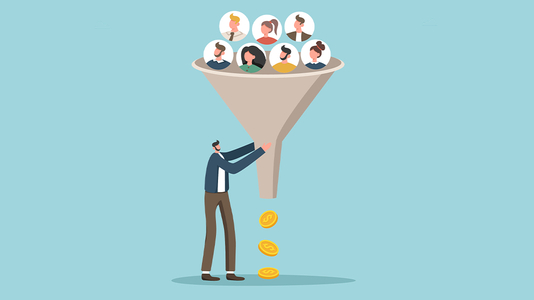
Attracting new customers is only the first hurdle. Many teams generate leads but struggle to turn interest into real growth. Customer acquisition is the process of moving someone from first awareness to becoming a paying customer. It happens in three stages: awareness, consideration, and conversion.

Source: Zendesk

Rather than tracking and optimizing every sales effectiveness metric, focus on those that align with your goals.

Source: Pipe Drive

Sales effectiveness refers to your sales team’s ability to convert prospects into leads — and eventually paying customers or clients — at each stage of your sales funnel. If your sales process is effective, you will experience more “wins” than losses every step of the way.

Source: Spotio

We are in a new era where hybrid and digital selling reign supreme and artificial intelligence (AI) emerges. In many ways the playbook for sales has been rewritten, opening doors to a more modern approach to engaging and selling to customers.

Source: Oliver Wyman

Sales efficiency tracks how long it takes for your sales team to turn prospects into paying customers. It’s a measure of how quickly you can generate revenue.

Source: Salesforce

More than 90% of sales leaders believe that hybrid sellers will be the most common sales role in their organizations over the next three years.

Source: Oliver Wyman
GO TO INSIGHT CENTER TO LEARN MORE

Read

Curated Reading

Related Programs